Water Saw and Water Mill
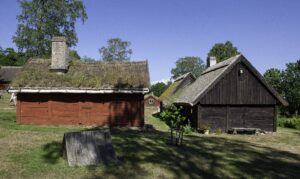
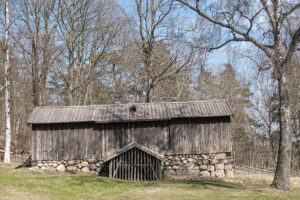
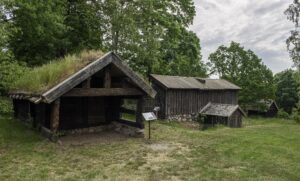
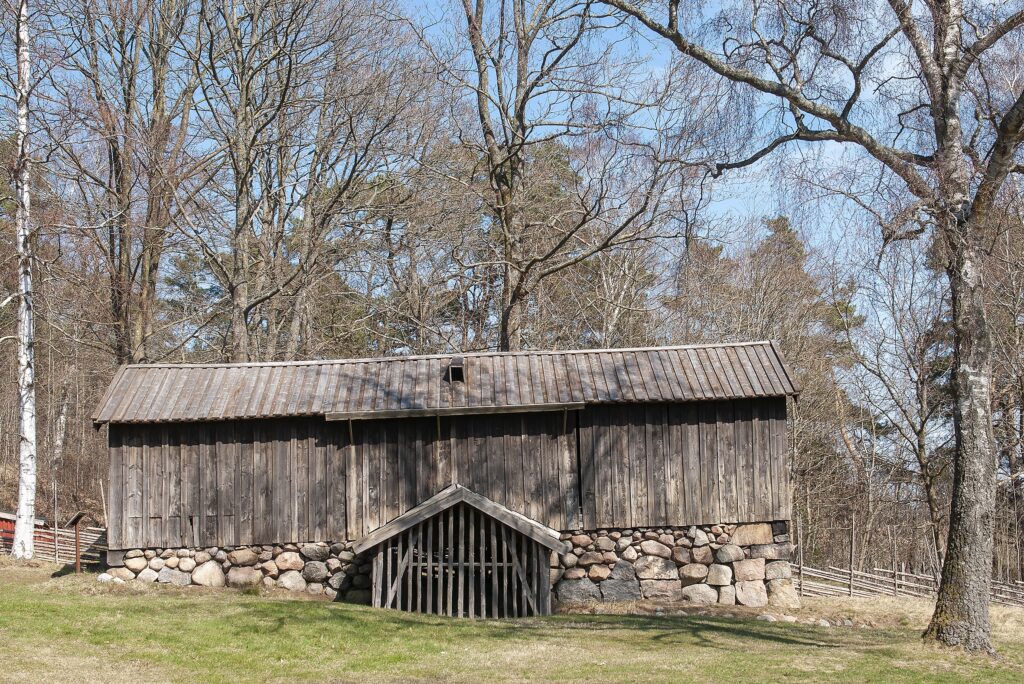
Here at Hallandsgården is a saw which was run by waterpower. It comes from Nedre Möllan in Vessigebro outside Falkenberg and was built in the mid 19th century. The exterior is covered by tared lockpanel and the roof is made of planks. On its side is a smaller extension above the water wheel. Its roof is covered with shingle. Such roofs have a specific name in Halland – sticketak.
The timber was sawed with the power from the water wheel. And this type of saw was called a nickesåg, a primitive kind of ram saw with just one blade.
It was a big achievement not having to saw all the timber by hand, and the water saw illustrates the transition from an agricultural to an industrial society.
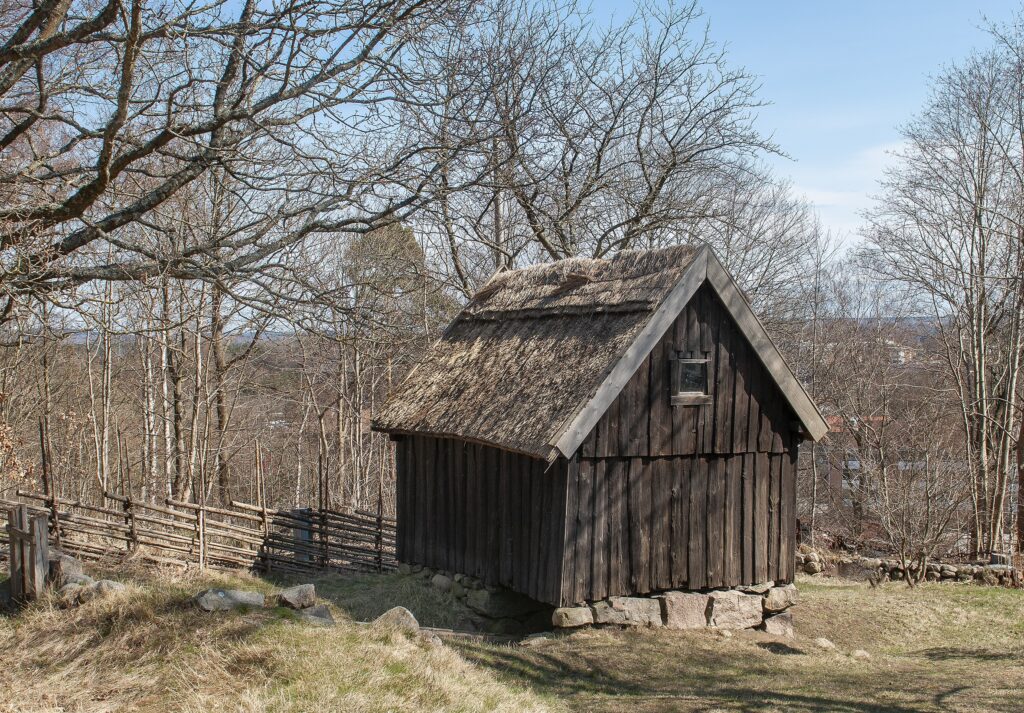
Below the saw is a so called skvaltkvarn, a water mill. It is placed in the eastern corner of Hallandsgården and comes from Veinge in Laholm municipality. Here the water creates the power, rather than muscles or wind. This type of mill is built to extract power from water with a weak flow, such as streams and creeks. The horizontal water wheel drives the mill wheels, made of stone, to grind the grain to flour.
Water mills like this one were already in use in the 12th century in Sweden.
Hallandsgården´s mill has an external surface of tared lock panel and a straw roof. The year when it was built, 1886, and the names of the men who built it are engraved on the façade. BHS and OHS it says – Bengt and Olof Hansson.