Hallandsgården – An Open-Air Museum
Today we almost take for granted that the Swedish regions and larger cities have open-air museums. Around the world we find similar places to show how our ancestors once lived their lives in the countryside. But in Sweden, in the late 19th century, this was a new idea.
The idea of open-air museums is attributed to Artur Hazelius, who promoted the creation of Skansen in Stockholm 1891. But that is only one part of a larger context. When Sweden gradually left a time when most people worked within agriculture, and was industrialized, this caused anxiety. What would happen to the old world? To the folklore traditions and to what was considered as genuine Swedish culture? All pieces of clothing, painted furniture, songs, stories and myths, to dances and traditional painted wall hangings? Objects were collected and traditions written down, and eventually they started to buy and relocate some of the largest remains of the agriculture era: the buildings themselves.
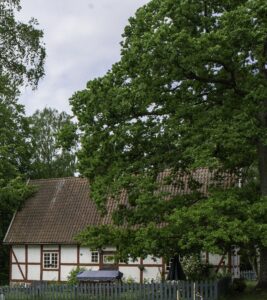
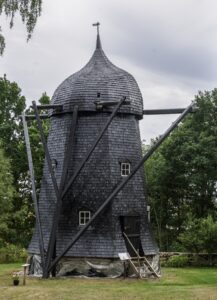
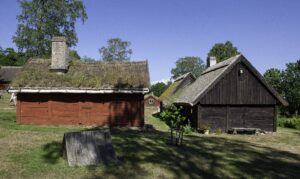
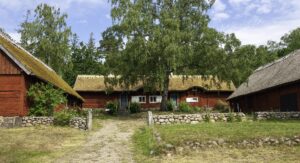
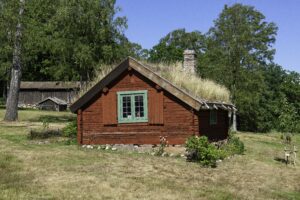
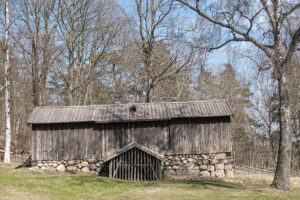
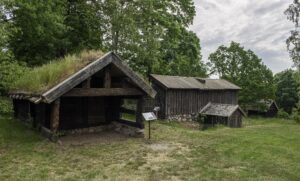
The houses were moved to chosen places, close to the towns, so that the urbanized people easily could educate themselves about the lives now left behind. At an open-air museum not only buildings and their interior were on display. This was also an arena for craftsmanship and performances of dance, music and theatre, where for example folk musician gatherings took place. Here old and new traditions found a scene. Such as The Swedish Flag Day (the predecessor of our National Day) Lucia and reading poetry to the people on New Year´s Eve. Those traditions are still celebrated every year at Skansen. Hallandsgården took over some of them. In general the open-air museums are meeting places that focus on tradition and history. With its variety of buildings Hallandsgården aims to illustrate life in the countryside in Halland, primarily during the 18th and 19th centuries.
In Halmstad they discussed and planned for decades before the Open-Air Museum Hallandsgården on Galgberget opened on Midsummer in 1925. It was a solemn event with thousands of visitors. The initiative for it all came from Hallands Museiförening with manufacturer Alfred Wallberg as the forerunner. They also worked for a museum in Halmstad, today´s Hallands Konstmuseum.
Folk dance and handicrafts where important parts of the activities, and for a long time carnivals with horses were arranged, where people from the past were recreated to meet new generations.
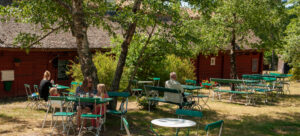
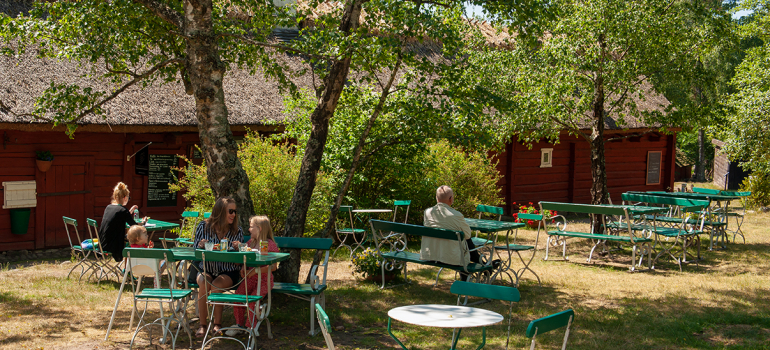
At the same time the open-air museum became a place for relaxation. On Galgberget, there was already a café and walking paths. Here the city dwellers could get away from the hardship of working life for a while, whether in summer or winter. Also today, when we´re used to foreign travel and fast transport, Hallandsgården is used for much more then education and facts about the past. All year round it is a place to gather one´s breath, and a reminder that the lives we live today are rather different to the ones our ancestors had a few generations ago. Exactly as they wanted when Hallandsgården was created.