Plants and buildings – to preserve and care for
At Hallandsgården there is a plot of land where flax is cultivated in the summer. You find it further down the slope, close to the water mill. Flax was an important useful plant during the 19th och 20th centuries in Sweden. It required many steps in the process of turning it into linen yarn. Here at Hallandsgården is also a so-called linbasta for drying the flax before breaking, scrutching and carding.
Nearby the plot of flax is a small area with four lying rocks. They have cup marks and grinding grooves, and one of them has been used as a mill stone. Three of them used to be part of the archaeological park which was situated in the garden of Hallands Konstmuseum. They were moved here in 2017 when the museum was to be rebuilt. Outside the stone wall of Hallandsgården, and outside the wooden fence, several milestones can be found. They were also moved here, and in the olden days they would show distance to passersby; a kind of predecessor of today´s road signs.
When Hallandsgården opened in 1925 basically the whole area was full of birch trees. The birch was considered typically Swedish and that went well with the nationally romantic spirit at the time. The birch trees have over time died and only a few of them are still on the premises. During the last couple of years other trees, such as linden, willow and different fruit trees have been planted. The idea today is that what is planted shall remind us of the environment where the buildings originally stood.
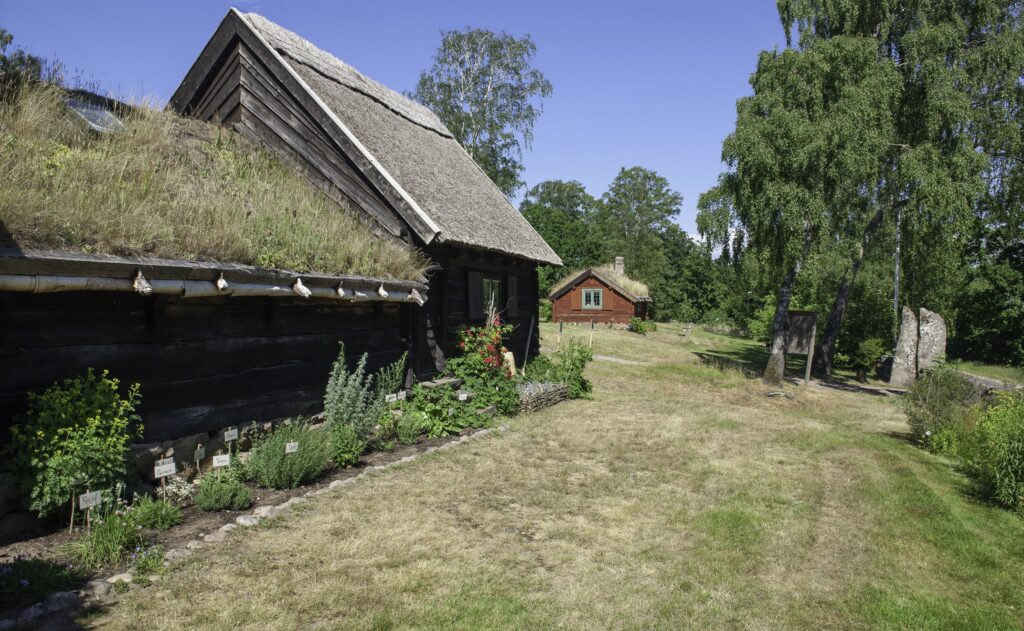
On the premises one can also find cultivations of older types of plants, including medical and kitchen herbs, as well as plants with more of a decorative purpose. Outside Hörsåsstugan is a smaller herbal and vegetable garden, which is cultivated in summer. In the flowerbed alongside the stone wall there are berry and rose bushes together with different flowers.
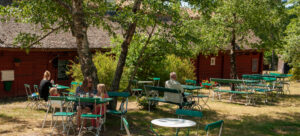
At Hallandsgården there is also a playground, which opened in 2013. Here, the younger visitors can use the swings and play with lifelike animals. During summertime one of the nearby buildings functions as a playhouse.
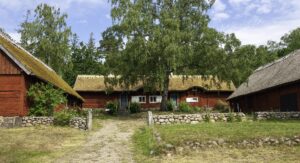
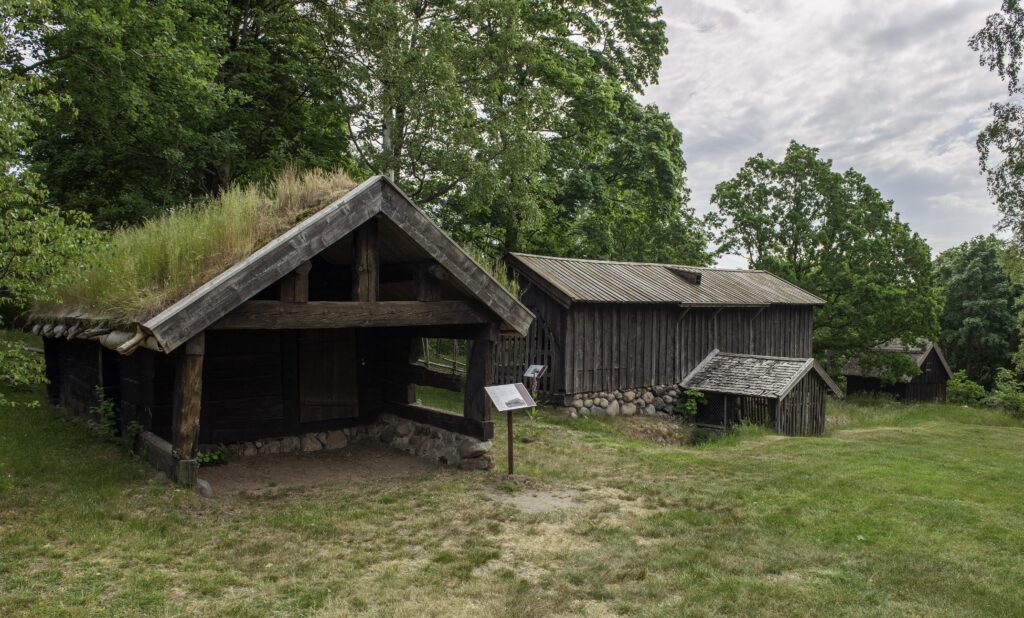
Many people believe that the older buildings and constructions tend to be better in terms of sustainability. When you think about how long the buildings at Hallandsgården have survived there seems to be some truth in that.
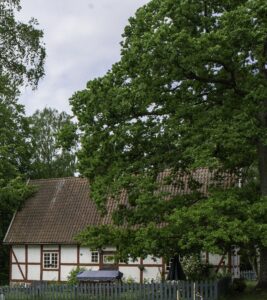
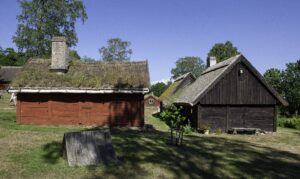
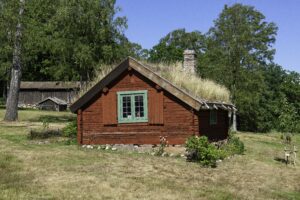
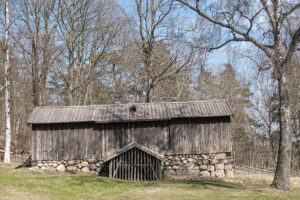
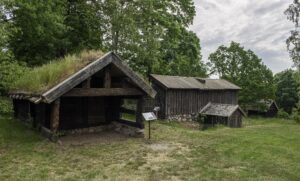
Originally many of the houses were unpainted and consisted of unprotected wood, but later in history they were painted with the classical Swedish Falu red, or with a mixture of tar, linseed oil and turpentine – so-called Mahogany of Roslagen.
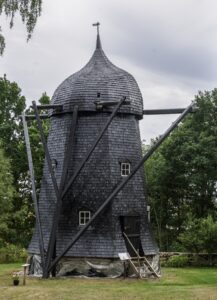
A house with wooden walls and straw roof, however, does not stand the test of time to live on from generation to generation without care and expertise. Large sums are spent on a yearly basis to maintain the cultural history values at Hallandsgården. Conservators have made a care plan for this ongoing work.