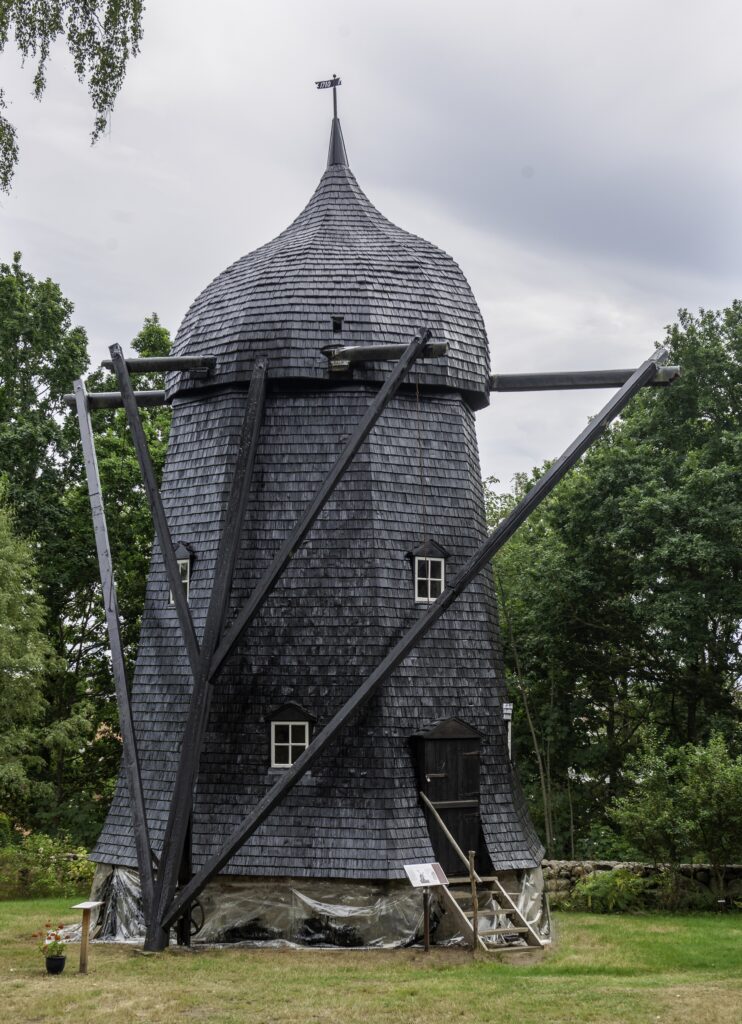
The Wind Mill
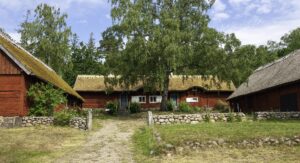
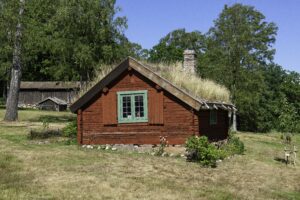
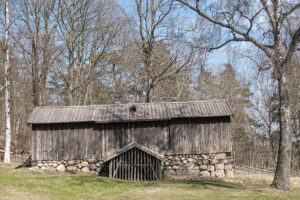
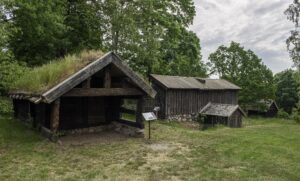
Here at Hallandsgården we focus on working life in the countryside, by telling about different types of activities and the buildings where they took place. During the 18th and 19th centuries most were farmers and lived in the countryside. Working at a farm required quite a lot of muscular power. To facilitate the work, they used horses and oxen as towing assistance when cultivating the land.
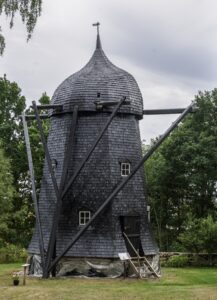
In the middle of the area stands the pompous windmill, which at some point in the first half of the 19th century was erected at Kvarnagård in Morup, north of Falkenberg. It is a mill, which with wind power, grounds the crops of the surrounding land. Together with the watermill it was among the first machines to run by anything other than muscular power.
Windmills predominately existed on open plains close to the coast where it was windy. The Swedish name Väderkvarn has to do with weather, and in the olden days the word väder was usually used for wind. In Skåne windmills are known as vindmölla and that word also exists dialectally here in Halland.
The local farmers paid the owner of the mill to grind their grain to flour. Most of it for animal feed, and only a small amount was turned in to baking flour.
The model we see here is a traditional Dutch type. Typical for this type is that the octagonal lower part stood still, while the upper part, that is the onion shaped cap, turned. In that way the wings could move with the wind. The exterior of the mill is covered by tarred wooden shavings.
Inside the mill is an ingenious machinery. On the second floor two mill stones, one for grinding baking flour and one for grinding animal feed. Those are interconnected in a clever way with different cogwheels, made of wood and metal. Unfortunately, the wings of the mill were broken in the big storm named Gudrun in 2005.
At harvest a reaper machine was used, a predecessor of the combined harvester. In the long building on the east side of Krafsagården a horse- or ox drawn reaper is kept.
When the grain was going to be ground another option was a smaller type of mill, more likely to be owned by the farmers themselves. Mill stones were then moved by human muscular power. Or by horses, which of course increased the power a lot.